Why the Indian Power distribution network requires robust surge protection
India’s power ecosystem is expanding at an unprecedented pace. From high-rise buildings and industrial corridors to renewable energy parks and digital infrastructures, every sector is becoming increasingly dependent on uninterrupted and stable electricity. However, India also faces one of the most challenging electrical environments in the world marked by lightning activity, grid instability, long transmission distances, and rapidly fluctuating loads.
In such a landscape, surge protection is not optional, it is essential.
Here’s why robust surge protection devices (SPDs) have become vital for the Indian power distribution network.
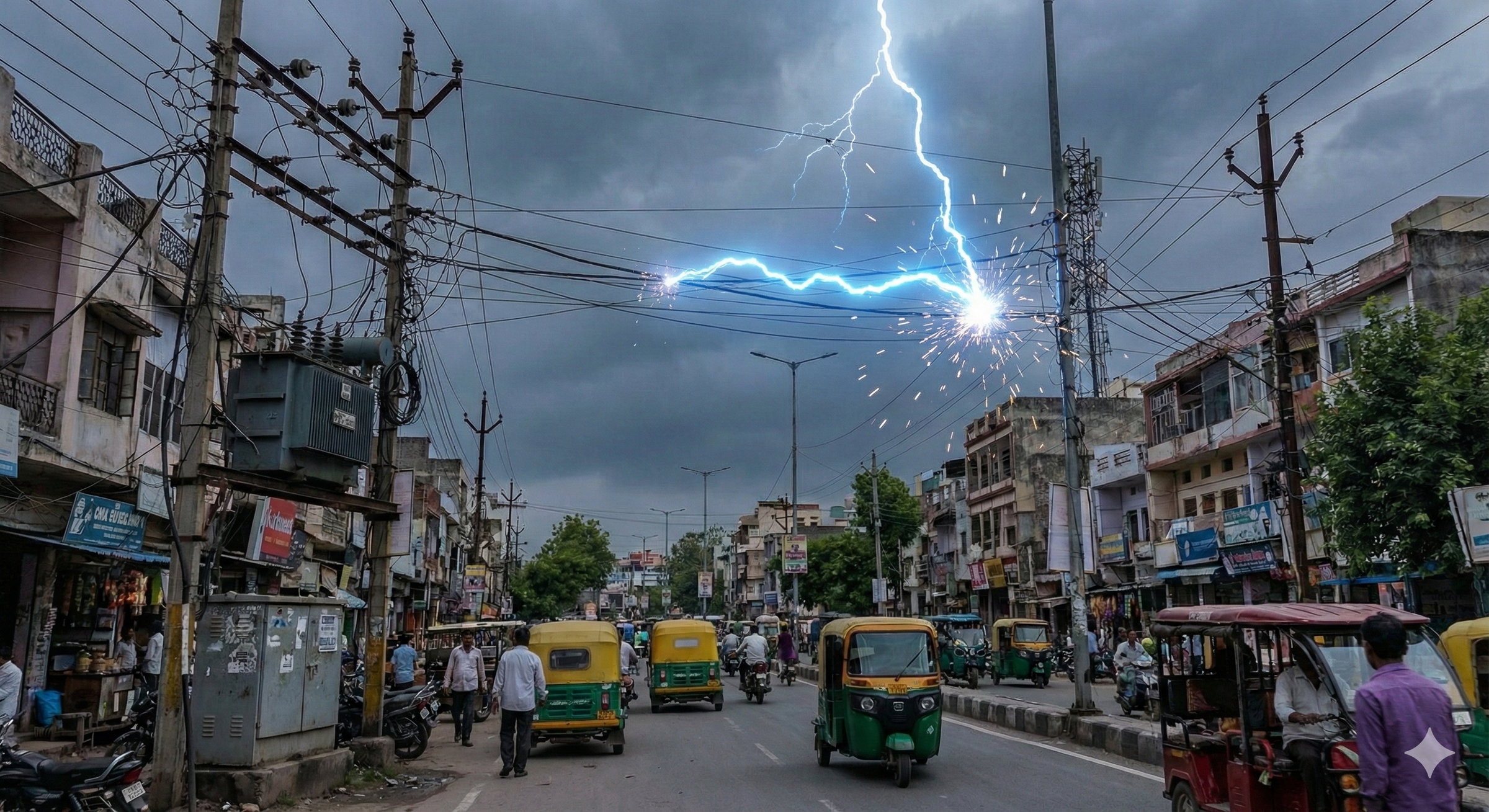
1. India Is among the world's most lightning-prone countries
According to multiple meteorological studies, India records millions of lightning strikes every year, particularly across states like Odisha, West Bengal, Bihar, Maharashtra, Andhra Pradesh, and Tamil Nadu.
Each lightning strike can inject millions of volts into the distribution system, creating dangerous transient surge voltages that are transmitted via:
- Overhead lines
- Underground cables
Without proper lightning current arresters and SPDs, these surges can instantly damage equipment and cause large-scale outages.
- Communication networks
- Connected electrical installations
2. Long transmission distances increase surge exposure
India’s grid stretches across diverse geography, with power often transmitted across hundreds of kilometres. Such long distances increase the chances of:
- Induced surges from nearby lightning
- Switching surges
This makes the network and everything connected to it more vulnerable, especially in rural or semi-urban regions where overhead lines are widespread.
- Capacitive or inductive coupling
- Overvoltage propagation at high speed
3. Rapid urbanisation is increasing electrical loads
Fast urban development means:
- More commercial complexes
- More home electronics
This rising demand leads to switching operations and load fluctuations within the network, each creating small but harmful surge voltages. Over time, these mini-surges degrade sensitive equipment, reducing lifespan and increasing downtime.
- More HVAC and automation systems
- More EV charging infrastructure
4. Integration of renewable energy calls for higher safety
India is pushing aggressively towards solar, wind, and hybrid renewable installations. While this is transformative, renewables add complexity:
- Inverters and control panels are highly sensitive to surges
- Lightning strikes in open solar fields induce strong transient currents
- Switching surges occur whenever these systems connect or disconnect from the grid
Without proper SPD coordination, these assets face high failure risk—which impacts overall reliability and ROI.

5. Industrial and Digital Infrastructure Cannot Afford Downtime
Industries and commercial facilities today run on:
- PLCs & automation
- Servers & data systems
- Intelligent building management systems
- Communication networks
- Safety and signalling equipment
Robust surge protection ensures continuity, safety, and long-term operational efficiency.
A single surge can lead to:
- Production stoppage
- Data loss
- Fire hazards
- Equipment burnouts
- High repair and replacement costs
6. Standards Demand Better Protection
India’s installations are increasingly guided by global and national standards such as:
- IS/IEC 62305 – Lightning Protection
- IS/IEC 61643 – Surge Protective Devices
- National Building Code (NBC)
- CEA Safety Regulations
Compliance isn’t just about meeting codes—it is about ensuring reliable and safe infrastructure.
These standards emphasise a coordinated SPD approach across:
- Main distribution panels
- Sub-distribution panels
- Equipment-level protection
- Lightning protection systems
- Earthing and bonding systems
The OBO Bettermann advantage in surge protection
OBO Bettermann India delivers solutions engineered for India's demanding electrical conditions:
- Type 1, Type 2 & Type 3 SPDs for every application
- Lightning current arresters for high-risk zones
Our surge protection portfolio safeguards homes, industries, commercial buildings, data centers, renewable sites, and critical infrastructure.
- Tested and certified according to IS/IEC standards
- Reliable performance in harsh Indian environments
- Complete system protection—from building entry to equipment level
Conclusion
India’s power distribution network is evolving rapidly—but so are its challenges.
With frequent lightning activity, long transmission distances, fluctuating loads, and sensitive digital systems, surge protection is a fundamental requirement for safety and reliability.
A well-designed SPD solution not only prevents equipment failures but also ensures operational continuity, reduces downtime, and enhances the overall resilience of the electrical network.
OBO Bettermann remains committed to enabling safer, smarter, and surge-protected India.